Recently, SHVRI systematically reviewed the application potential, current bottlenecks, and future development directions of Schistosoma microRNAs (miRNAs) in the molecular diagnosis of schistosomiasis. The findings were published in Infectious Diseases of Poverty.
As schistosomiasis control efforts continue to advance toward elimination, the limitations of traditional parasitological egg detection and existing antigen detection methods in low-intensity infections have become increasingly evident. There is an urgent need to develop more sensitive, accurate, and field-applicable diagnostic technologies. Existing studies have shown that certain Schistosoma miRNAs demonstrate strong potential in early screening and treatment efficacy evaluation.
However, the transition of Schistosoma miRNA from laboratory research to field application still faces multiple challenges. These include insufficient sensitivity in low-intensity infections, lack of unified reference standards and standardized procedures, and reliance on laboratory platforms such as RT-qPCR and next-generation sequencing. In the future, efforts should focus on accelerating the development of low-cost, portable molecular diagnostic platforms suitable for grassroots and field use, and promoting the integration of these molecular tools into national schistosomiasis surveillance and elimination systems.
Haoran Zhong, Assistant Researcher at SHVRI, is the first author of the paper, and Researcher Yamei Jin is the corresponding author. The study was supported by the Shanghai Sailing Program and the Agricultural Science and Technology Innovation Program of the Chinese Academy of Agricultural Sciences.
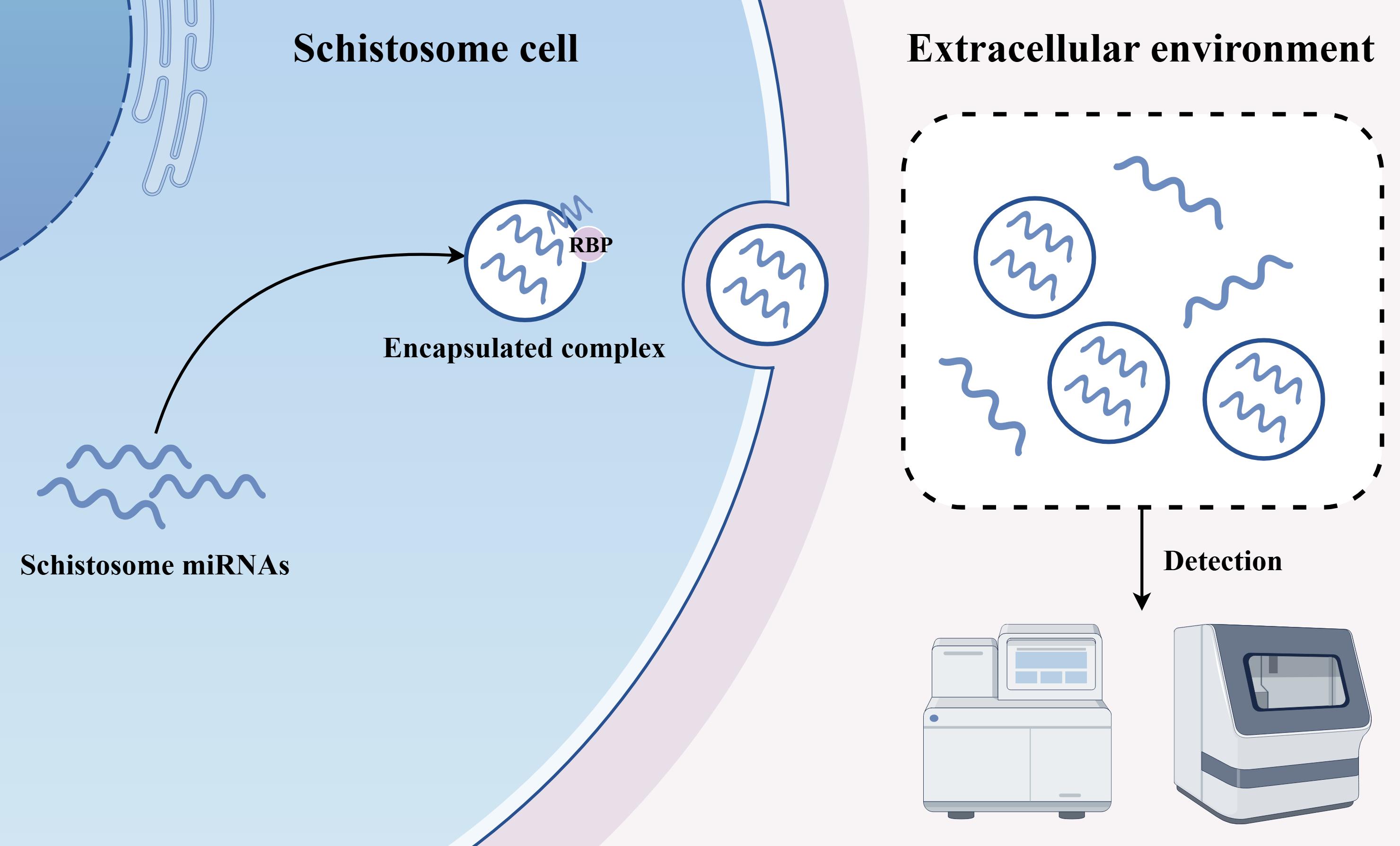
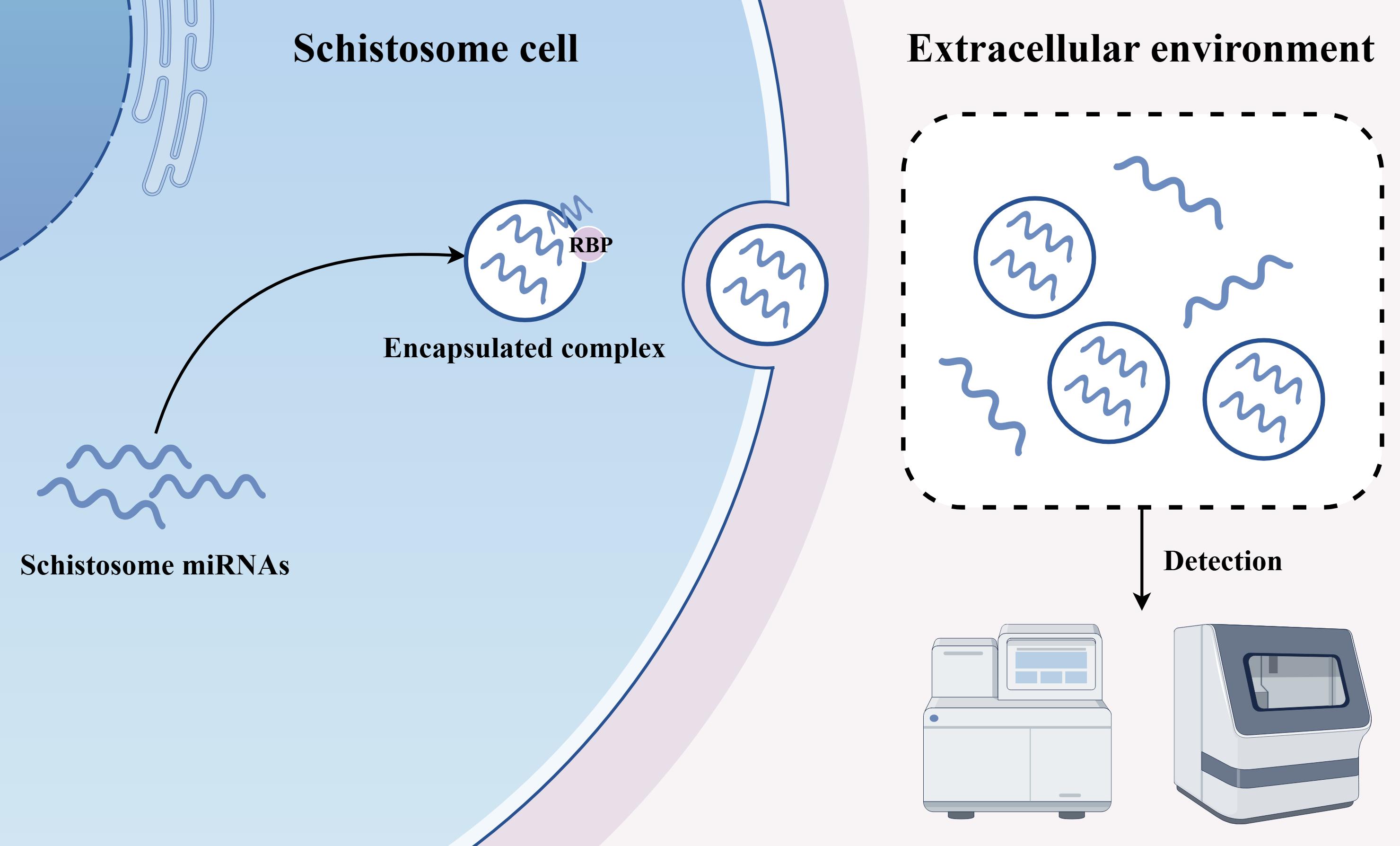
Schematic diagram of the release of Schistosoma miRNAs into the extracellular environment and their use in molecular detection.
Original article link: https://link.springer.com/article/10.1186/s40249-026-01425-w