Researchers from SHVRI CAAS, have uncovered a mechanism by which the microbiota-derived metabolite conjugated linoleic acid (CLA) enhances host resistance to Salmonella infection. The study was published in Gut Microbes.
Salmonella infection remains a major cause of intestinal and systemic disease, with host defense relying on coordinated microbiota–immune interactions. However, how microbiota-associated factors enhance this process is not fully understood.
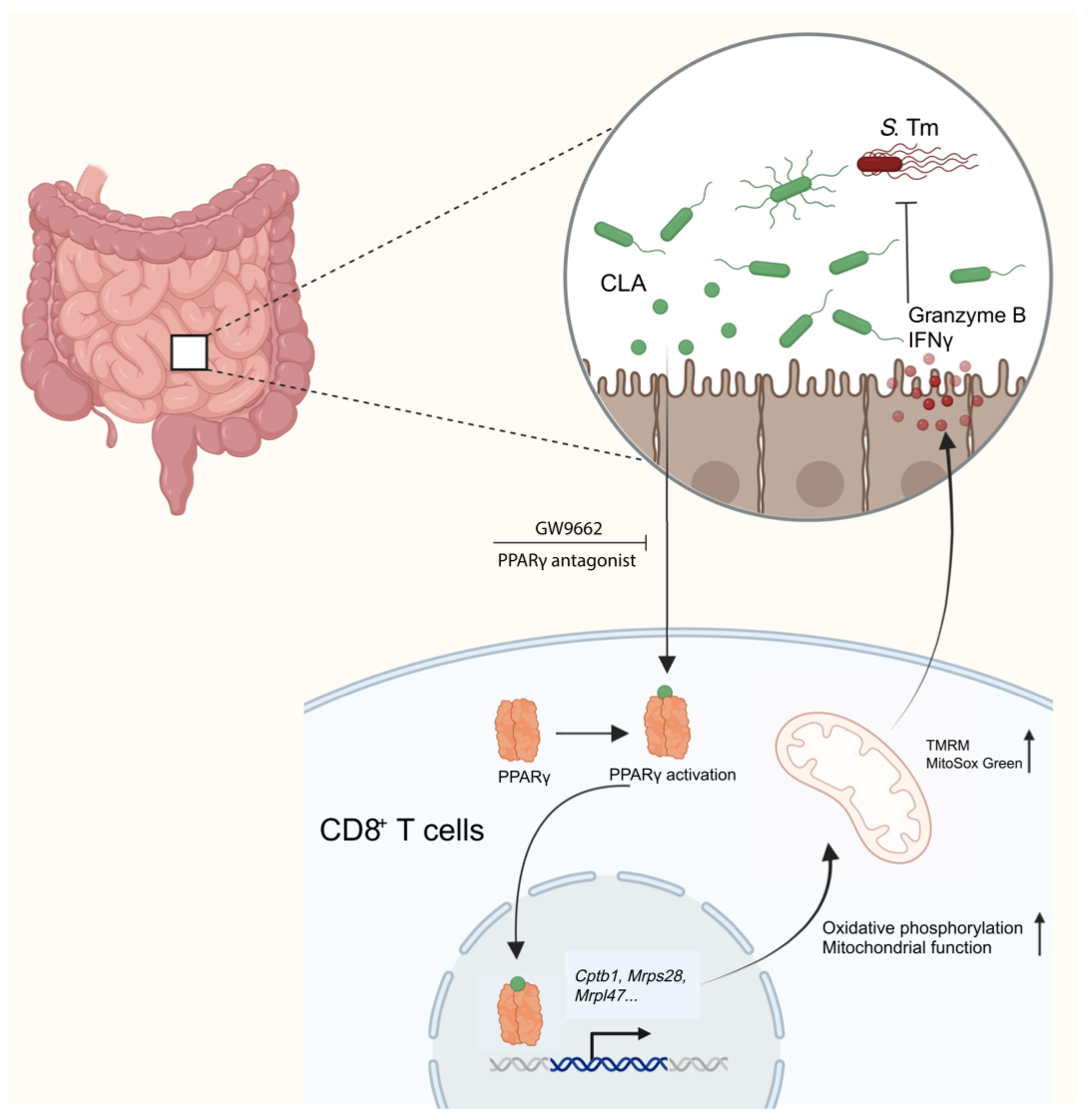
Using integrated multi-omics and functional approaches, the study shows that CLA reshapes the gut microbiota, enriches beneficial taxa such as Lactobacillus, and promotes metabolite production, thereby establishing an immunostimulatory intestinal environment. CLA pretreatment reduced bacterial burden, preserved epithelial integrity, and attenuated inflammation, without direct antibacterial activity. Mechanistically, CLA activates PPARγ signaling in intestinal CD8⁺ T cells, driving metabolic reprogramming toward enhanced oxidative metabolism and increased effector functions, including IFN-γ and granzyme B production. These findings define a microbiota–metabolite–immune axis that strengthens mucosal defense.
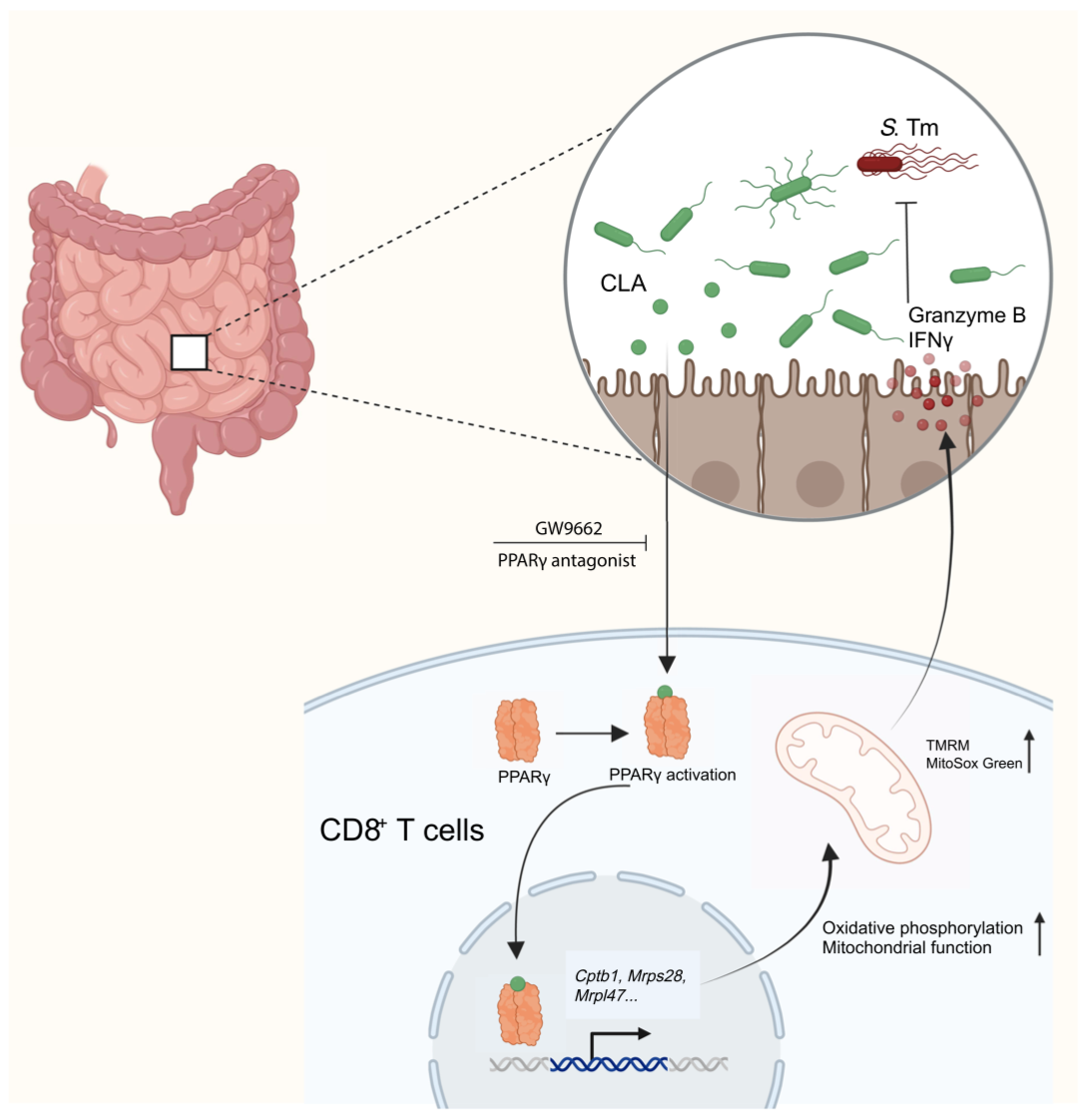
CLA enhances mucosal immune defense against Salmonella infection.
This work provides new insights into host–microbe interactions and supports metabolism-based strategies for infectious disease control.
This work was supported by the National Natural Science Foundation of China, the Shanghai Agricultural Science and Technology Innovation Program, the Shanghai Pujiang Talent Program, the Fundamental Research Funds for Central Public-interest Scientific Institution, and the Agricultural Science and Technology Innovation Program of CAAS.
Original article: https://doi.org/10.1080/19490976.2026.2657625